

Can You Sous Vide Steak and Fish Together? Here’s How I Do It
Sous vide steak and fish together in one bath? Yes—here’s the exact temp, timing, and why it works.
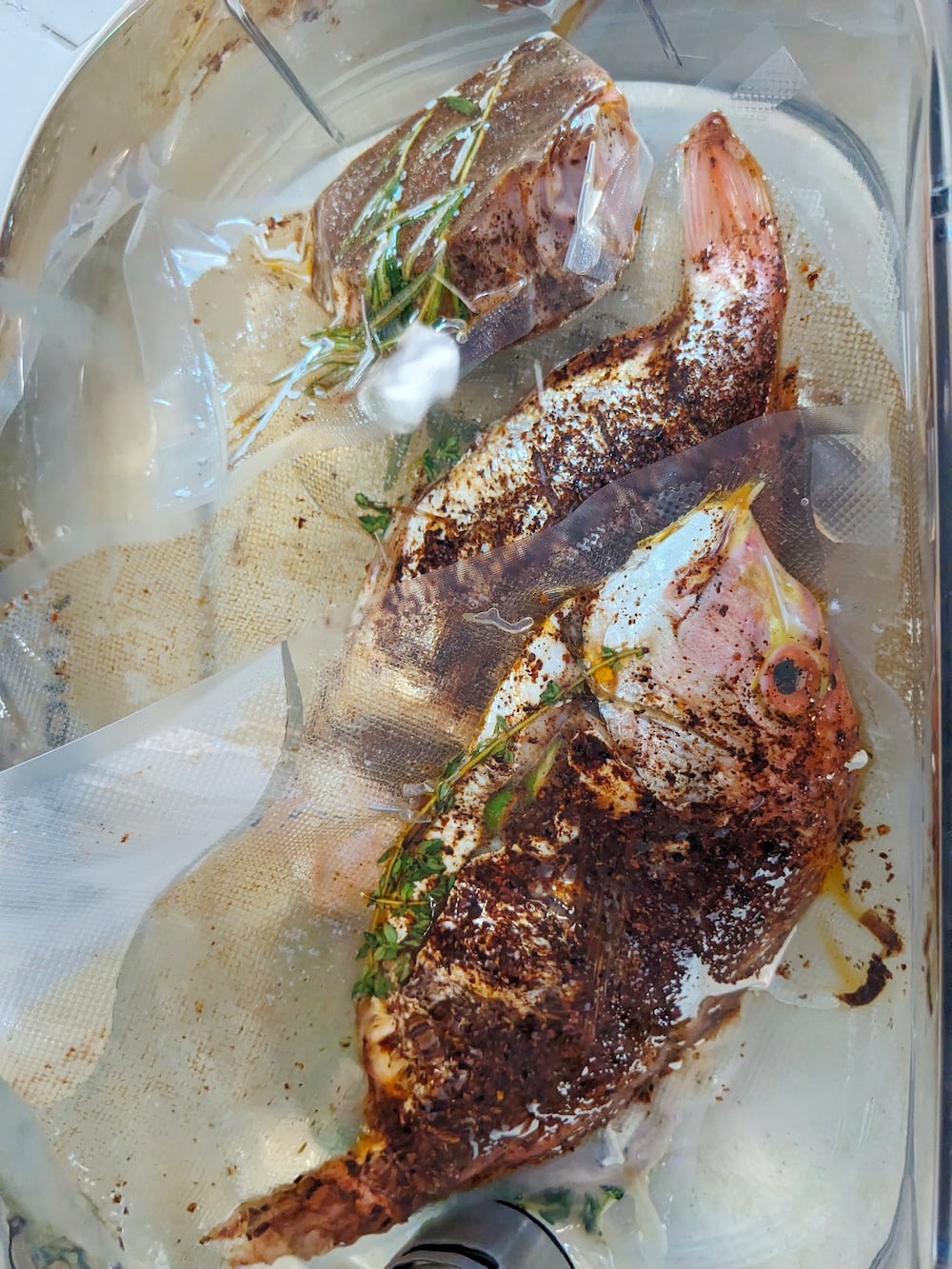
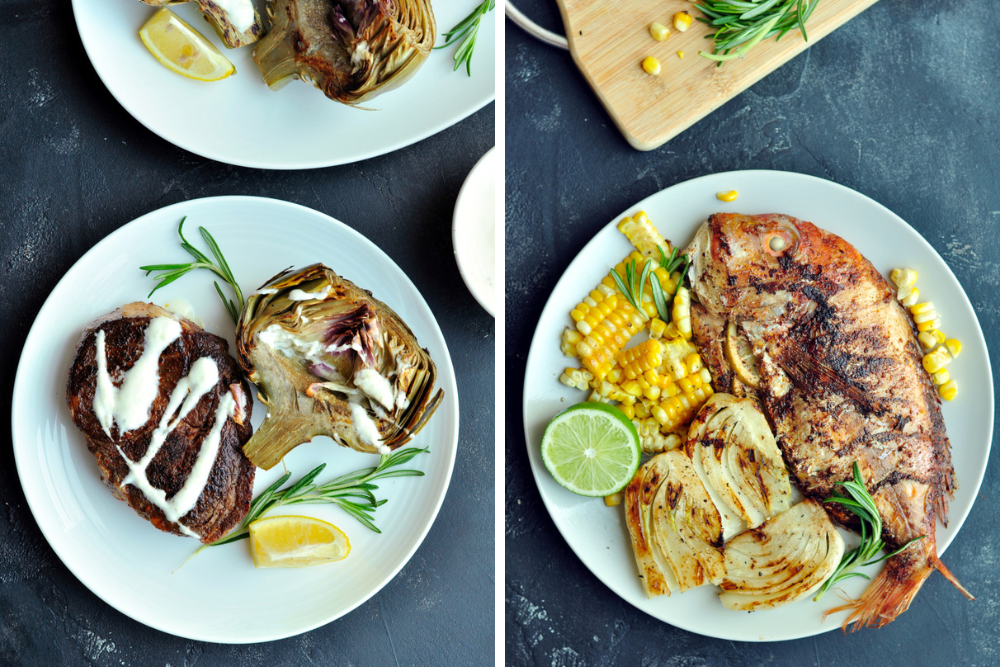
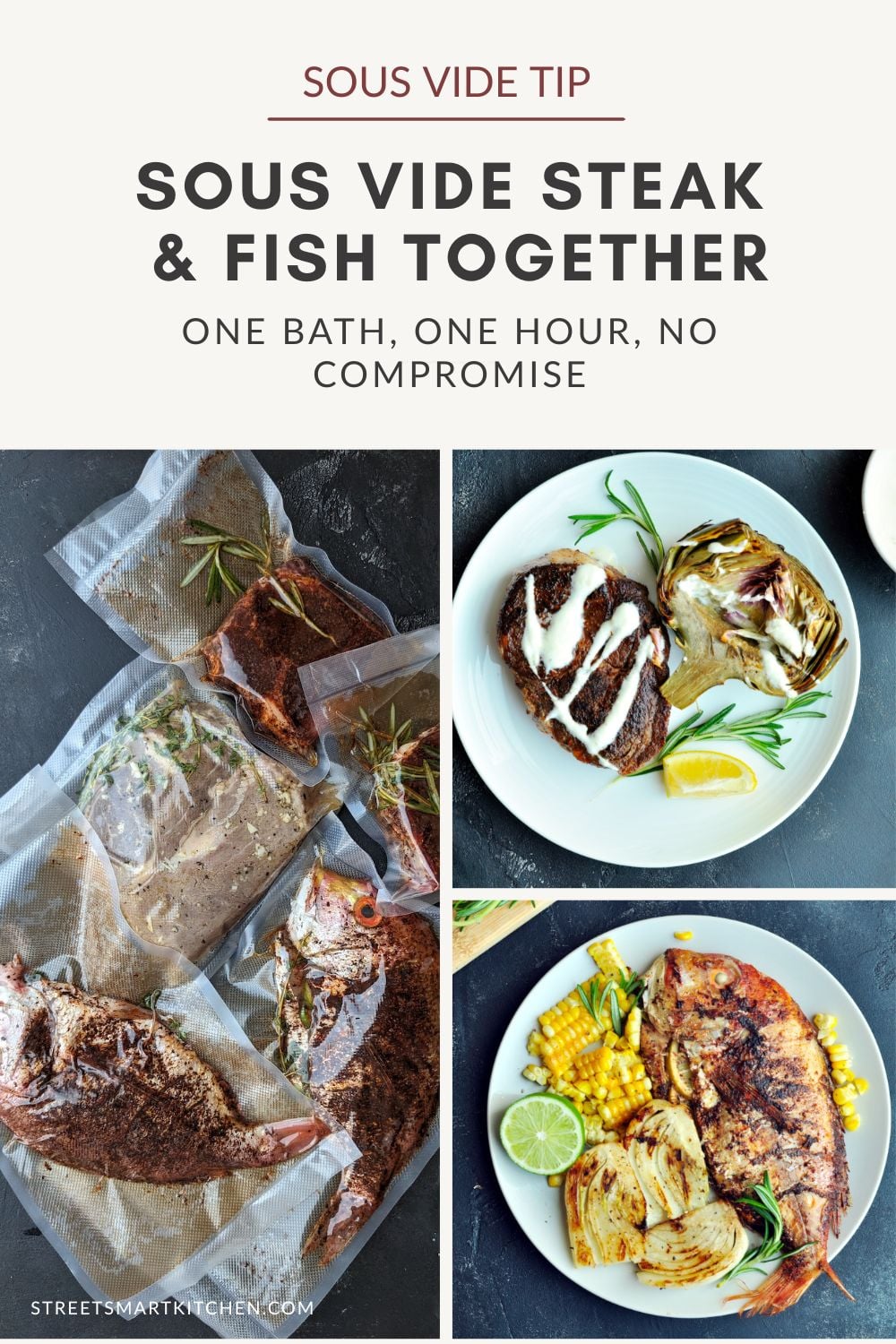
That’s a steak and a whole fish, cooking in the exact same sous vide bath, at the exact same time. If your gut reaction is that one of them has to lose, you’re not alone. Most people assume it’s one or the other.
It’s not. Both come out exactly the way they’re supposed to, at the same time, in the same pot of water. No timers going off in shifts, no juggling two separate cooking methods, no “wait for the fish, then start the steak.” One bath, one hour, two proteins, done.
This is what I call group cooking, and once you get the logic behind it, it’s hard to go back to cooking proteins one at a time.
Group Cooking Is Not Batch Cooking
If you’ve spent any time in the meal prep world, you’ve heard of batch cooking: making a big batch of one thing—a huge tray of chicken thighs, a giant pot of chili. Sure, it saves time, but you’re eating that same chicken thigh three or four nights in a row.
Group cooking is a different animal. Instead of one big batch of the same thing, you’re cooking several different proteins at once, in the same water bath, at the same time. A steak here, a fish there, maybe lamb chops in a third bag next time. Different items, same session, same pot of water.
The appeal is obvious once you say it out loud: you heat the water once, you clean up once, and you walk away with two (or three, or four) different proteins ready for the week instead of just one.
Why Steak and Fish Actually Work Well as a Pair
The trick to group cooking is picking things that are happy at the same temperature for the same amount of time. Steak and a whole fish happen to be a great match for that — and I want to be specific about “whole fish,” because this pairing doesn’t work the same way with a fillet.
At 131°F (55°C) for 1 hour (for a steak about 1 inch thick), the steak comes out beautifully — and that same window works for a whole fish too. That’s because a whole fish, bones and all, is a much thicker piece of food than a fillet. Heat takes real time to reach the center of something that thick, and the bone itself slows things down further, creating cooler spots near it that need extra time to catch up. A whole fish needs both higher heat and more time to cook through evenly and safely.
A fillet is a completely different story. It’s thin, so it cooks fast. Most fillets are done in 30 to 45 minutes at a much lower temperature, often in the 120°F (49°C) to 130°F range (54°C). Put a fillet in a 131°F (55°C) bath for a full hour alongside your steak, and you won’t get a happy accident—you’ll get an overcooked, mushy piece of fish. If you’re pairing steak with fish for group cooking, use a whole fish, not a fillet.
That’s really the whole trick: find pairings where nobody has to compromise on doneness. Steak and a whole fish just happen to line up.
Seasoning: Match It or Don’t, It Doesn’t Matter
Here’s the part that surprises people most. For the batch in the photo, I used the same Coffee Chili Dry Rub on both the steak and the fish, mostly because it was already open on my counter and one rub for two proteins is about as low-effort as it gets.
But that’s a convenience choice, not a requirement. You could season the steak with something bold and smoky and give the fish a completely different treatment—a squeeze of lemon and some herbs, say—and they’d still cook side by side in the same bath for the same hour. The seasoning is entirely independent of the cooking method.
That’s another place where this breaks from traditional batch cooking. Batch cooking usually means everything in the pot gets treated the same way, because it is the same thing. Group cooking doesn’t require that. Two totally different proteins, two totally different flavor profiles if you want them, one shared bath.
How to Actually Do This
- Season each protein. Rub, marinate, or just salt and pepper—whatever you’re using for each protein, apply it before bagging. They don’t need to match.
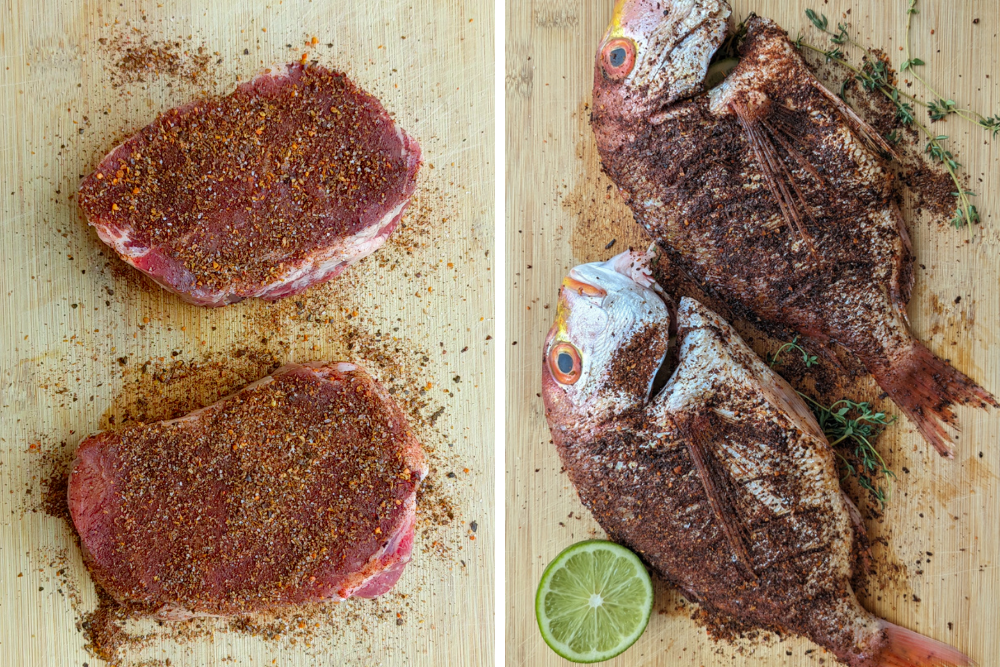
2. Bag them separately. Each protein gets its own vacuum-sealed bag, even though they’re going in the same water. They’re different proteins meant for different meals, so keeping them in separate bags means each one comes out ready to go straight into whatever you’re building with it that day—which is the whole point of meal prepping.
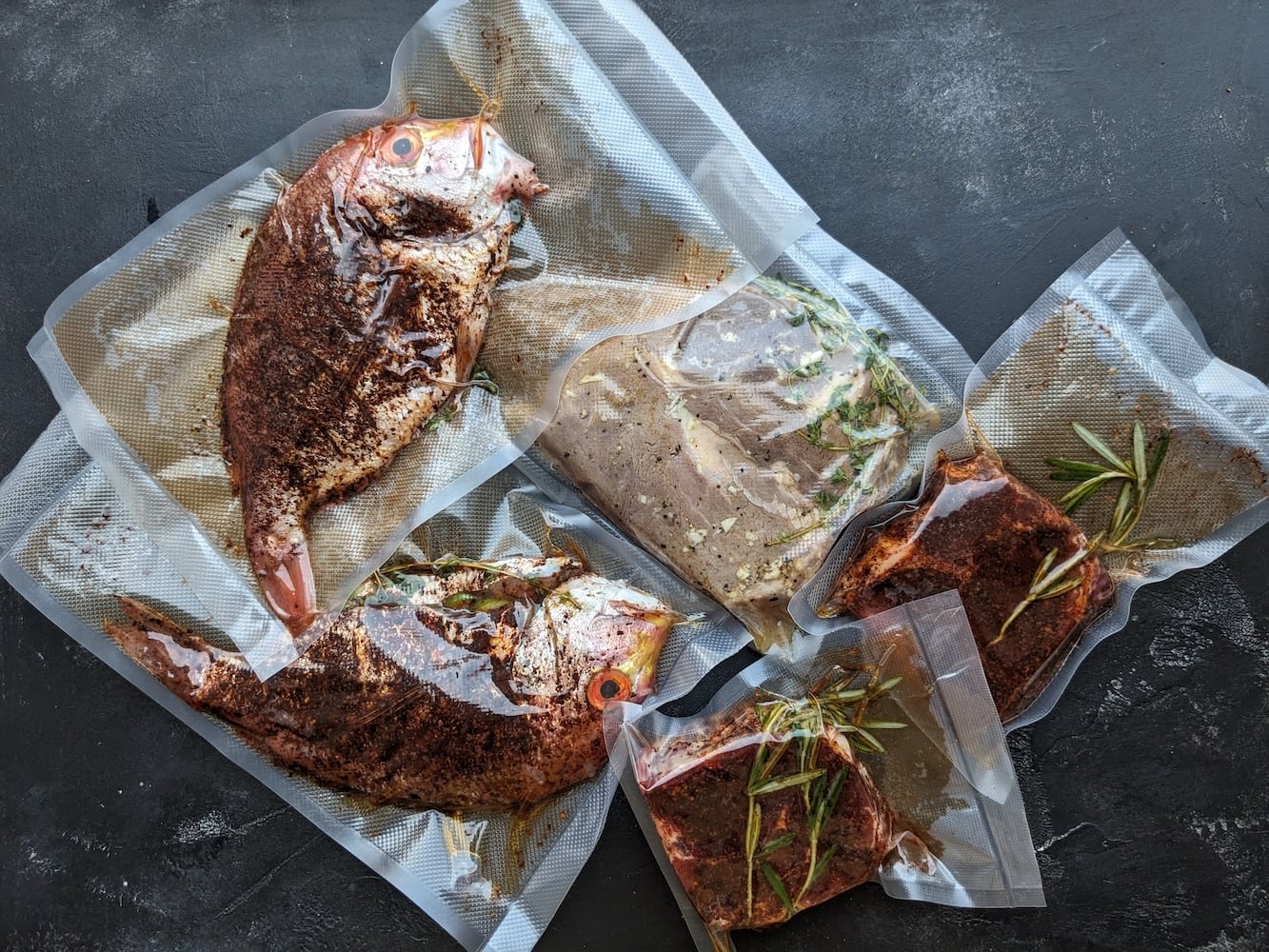
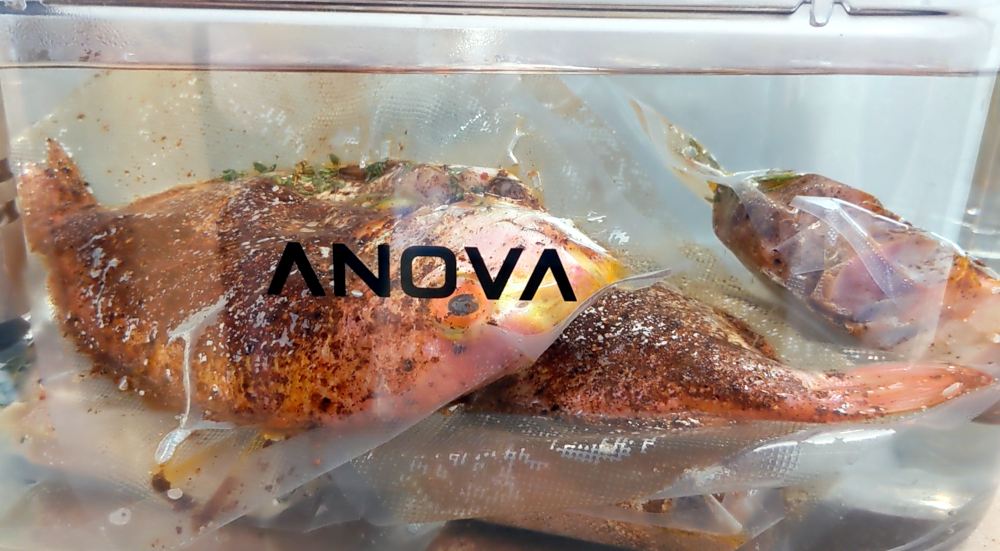
3. Drop them in the same bath. Set your sous vide to 131°F (55°C). Put both bags (or multiple ones if you’re preparing more) in together; no staggering needed.
4. Cook for 1 hour. That’s the full window for a 1-inch steak, and it’s also what a whole fish needs to cook through evenly given its thickness and bones.
5. Finish each one. The steak wants a hard sear for color and crust. The fish might just want a quick pass in a hot pan for the skin, or nothing at all if you’re eating it straight from the bag.
6. Chill and store what you don’t eat right away. Whatever you’re not serving right away, drop the sealed bags into an ice water bath to chill them quickly, then move them to the fridge. Left sealed in their vacuum bags, they’ll keep for up to a week — ready whenever you actually want to eat them.
StreetSmart Kitchen Tip: Give your bags a little breathing room in the bath rather than stacking them flat against each other. Water needs to circulate around every surface of the bag for even cooking—especially with a whole fish, which isn’t a uniform shape like a steak.
A quick note on gear before we zoom out: this pairing is one where the right container and bags matter, since you’re managing two very different shapes in the same bath.
Essential Equipment
- Sous vide circulator: Holding a steady 131°F (55°C) for the full hour is what makes this pairing work—any real temperature drift and either the steak or the whole fish comes out wrong. The Anova Precision Cooker 2.0 is my everyday workhorse. I also use the KitchenBoss G320 — you can read my in-depth review to see whether it might be right for you.
- Sous vide container: You need enough room for two very differently shaped bags—a compact steak bag and a long, irregular whole fish bag—to sit without crowding each other, since water has to circulate around both. I use the Anova 16L container for almost everything, including this pairing.
- Vacuum sealer + bags: Since the steak and fish are bagged separately here, you’re sealing two completely different shapes: a simple rectangle for the steak and a long, irregular one for a whole fish, head and tail included. My go-to is the Anova Precision Vacuum Sealer with custom-cut vacuum rolls so you can size each bag to what’s actually going in it, instead of trying to force a whole fish into a bag made for something else. For a deep dive on bags, check out my Sous Vide Bags 101 guide.
- Heavy-duty skillet: Once both come out of the bath, finish them back-to-back—a hard sear on the steak, then a quick pass for the fish skin. Cast iron holds its heat well enough to handle both without losing temperature in between. Lodge Cast Iron Skillet is a reliable, affordable pick.
This Is Just the Warm-Up
Two proteins in one bath is a nice trick on its own. But the real payoff of group cooking shows up when you stop thinking about one dinner and start thinking about a whole week—multiple proteins, multiple vegetables, all moving through the same water bath in sequence, until you’ve got a week of meals built from a single afternoon in the kitchen.
That’s exactly how Sous Vide Once, Savor All Week came about. I built it out of my own need to feed my family well without meal prep eating my whole weekend, and turned it into a full system with shopping lists, timing, and serving math already worked out.
If pairing just a steak and a fish saved you a step tonight, imagine what a whole week of that looks like.
About the Author

Sharon Chen is an Integrative Nutrition Health Coach and author of the Complete Sous Vide Cookbook. She believes food not only brings healing but also connection. As the creator of StreetSmart Kitchen, she aims to make meal prep easier than ever and help you find balance, ease, joy, and simplicity in the kitchen as you improve your well-being.